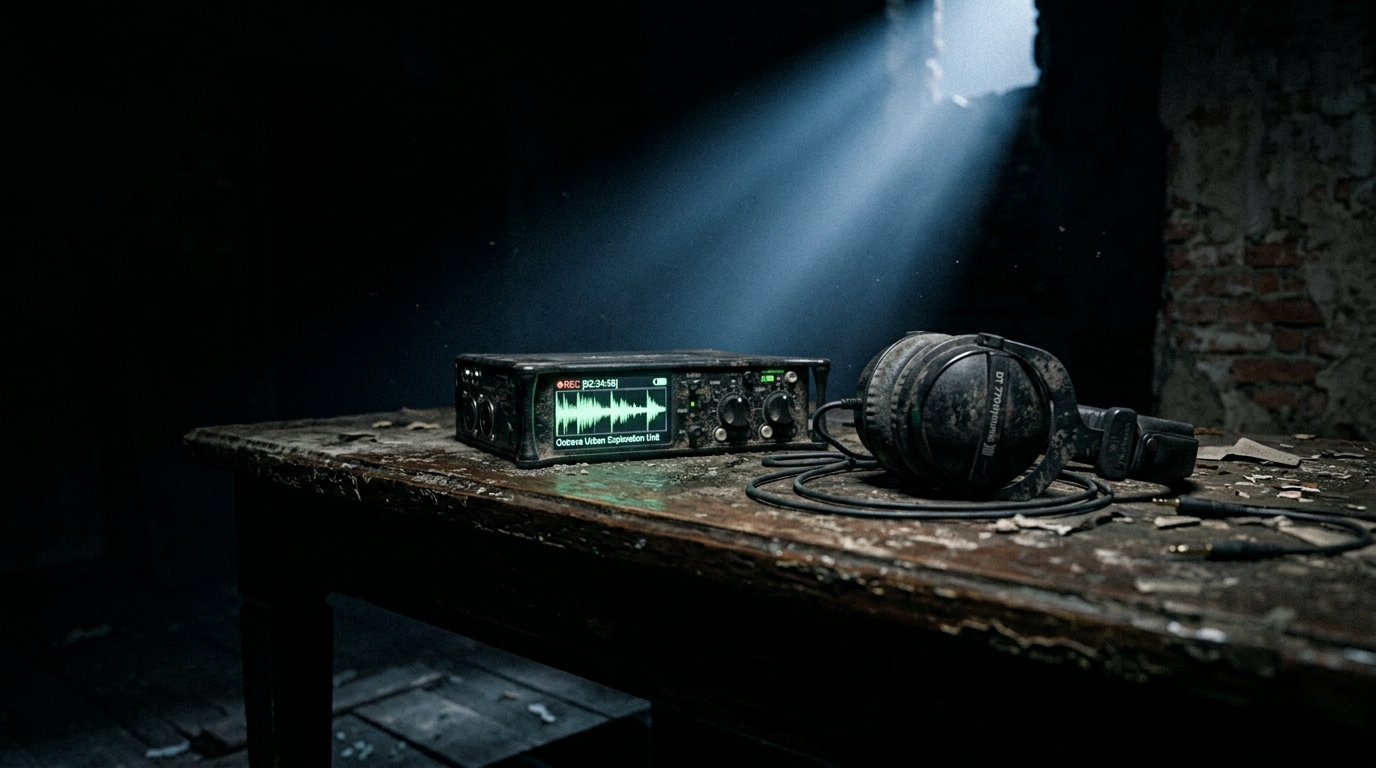
EVP: Uncovering the Voices in the Static
What if the silence is actually filled with voices? Electronic Voice Phenomena (EVP) are one of the most debated and chilling aspects of paranormal investigation. Learn how to capture them, why they happen, and how to tell a ghost from simple white noise.
EVP: Uncovering the Voices in the Static
You’re sitting in total silence in a long-abandoned hallway. You have your headphones on, the volume is turned up, and you are monitoring the audio feed from your digital recorder. Suddenly, through the hiss of background static, you hear a clear, distinct word. It wasn't there when you hit record, and it doesn't match any sound in the room.
It was a voice, and it sounded like it came from nowhere.
The EVP Principle: Electronic Voice Phenomena (EVP) refer to voices or sounds captured on recording equipment that were not heard by the human ear at the time of the recording. For investigators, these are potential fragments of communication from something beyond our immediate perception.
The Three Classes of EVP
In the paranormal community, investigators categorize EVPs into three distinct classes based on their clarity and quality. Understanding these is crucial for any serious researcher:
- Class A: The holy grail of EVP. These are voices so clear and loud on the recording that they sound like someone was standing right next to the microphone. They are easily understood by anyone without the need for headphones or audio filtering.
- Class B: This is the most common type. You didn't hear anything while you were in the room, but when you play back the audio, a voice emerges from the static. These require focused listening, often with headphones, and sometimes careful editing to verify the words.
- Class C: The lowest quality. These are faint, whispered, or heavily distorted voices embedded deep within the noise floor. They are highly debated and often require audio enhancement software just to make them audible.
The Science of Sound: Skepticism and Pareidolia
Before we claim a breakthrough, we must address the most common scientific explanation, which is Auditory Pareidolia.
Just as your brain can see faces in clouds or patterns in wallpaper, it can also do the same with sound. White noise, including the random hiss from electronic devices, wind, or distant traffic, contains a vast spectrum of frequencies. When our brain is under stress or intensely focused on listening for something, it tries to make sense of that randomness by assembling it into familiar patterns such as words, names, or even screams.
⚠️ Rookie Mistake: Relying on low-quality audio from a smartphone to prove an EVP. Most modern smartphones use aggressive noise-cancellation algorithms designed specifically to remove the very frequencies where EVPs are thought to exist. For real investigation, dedicated digital recorders are non-negotiable.
How to Capture High-Quality EVP
If you want to move beyond coincidences and start gathering legitimate data, your setup matters. To capture a clean EVP, you need to minimize the noise floor, which is the unwanted background sound.
- 🎙️ Digital Recorders over Smartphones: You need equipment that allows for manual gain control and high bit-rate recording, at least 24-bit/96kHz, to capture the finest nuances of the audio spectrum.
- 📱 Minimize Interference: Turn off all electronic devices in the room, including your own phone. Put it on Airplane Mode to prevent electromagnetic interference from creating fake electronic pops and clicks.
- 📻 The Use of Spirit Boxes: While controversial, devices like the P-SB7 sweep through radio frequencies rapidly. This creates a constant stream of white noise that some investigators believe provides a physical medium for entities to manipulate and form words.
Verifying Your Findings
The hardest part of EVP work isn't the recording; it's the verification. To ensure your findings are legitimate, follow these steps:
- Multiple Angles: If possible, record with two different devices simultaneously. If the voice appears on both recordings at the exact same timestamp, you have much stronger evidence.
- Contextual Correlation: Did the voice respond to a question? If you asked, "Is anyone here?" and a second later a "Yes" is heard in the static, the context adds significant weight to the phenomenon.
- Review the Waveform: Use audio editing software like Audacity to look at the waveform. A true EVP often has a distinct shape and rapid onset that differs from random environmental noise or electronic hum.
In the world of paranormal investigation, silence is never truly silent. The question is: are you prepared to listen?